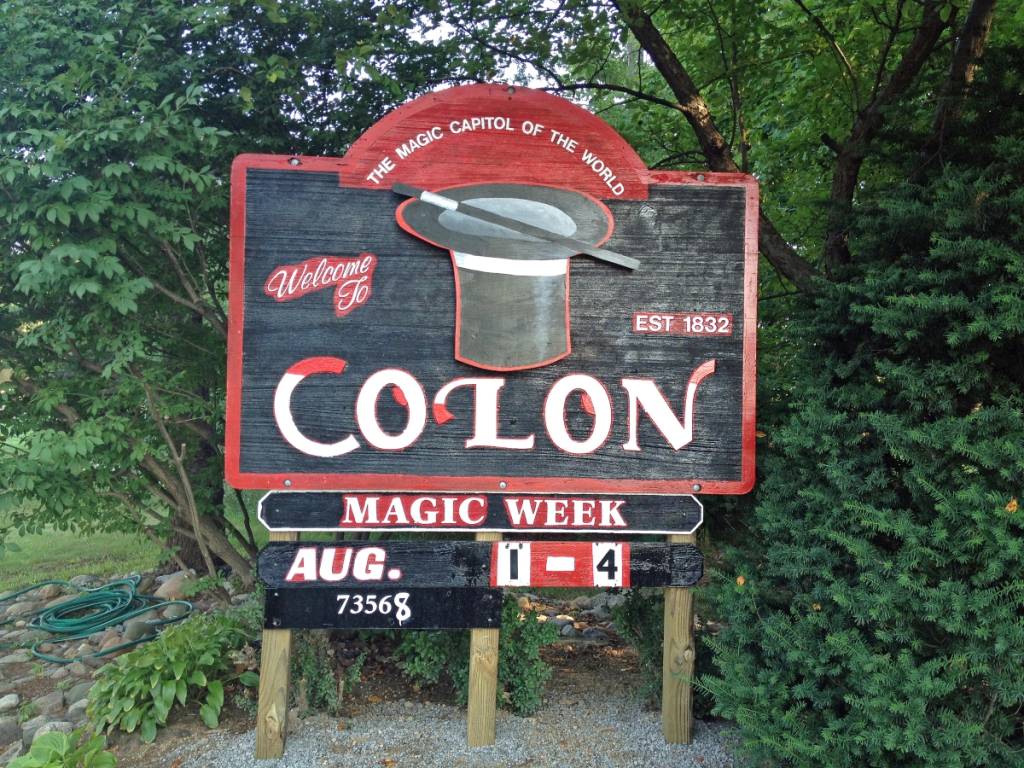

Michigan is home to plenty of unusual small towns, but few have a claim quite like Colon.
The tiny village in St. Joseph County has a population of just about 1,200 people, yet it has an outsized place in the world of professional magic.
In fact, the U.S. Congressional Record has referred to Colon as the “magic capital of the world.”
And its connection to magic isn’t just a catchy nickname — it dates back nearly 100 years.
How did Colon become the ‘Magic Capital of the World’?
Colon’s magic history began taking shape in the 1920s when legendary magician Harry Blackstone Sr. made the village his summer home.
Blackstone eventually partnered with Australian magician Percy Abbott, who later remained in Colon and established Abbott’s Magic Company with Recil Bordner in 1934. The company became a major manufacturer of magic equipment and helped turn the tiny village into a gathering place for professional magicians.
That same year, Abbott launched Abbott’s Magic Get-Together, an annual convention that continues to bring magicians and magic fans to Colon.
The event has become a major part of the town’s identity, with thousands of visitors arriving during the annual gathering.
The title eventually became firmly associated with the village. A 1955 entry in the Congressional Record described Colon as the “magic capital of the world,” and a 1962 Congressional Record entry used the same designation.
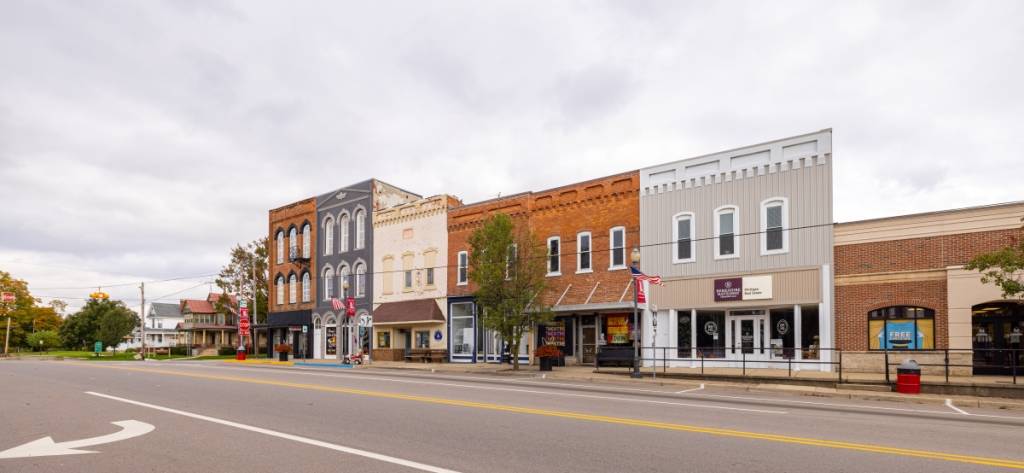
What can you do in Colon?
Visitors can experience the town’s unusual history by stopping at Abbott’s Magic, which remains one of the village’s main attractions.
The town also hosts magic performances and the annual Abbott’s Magic Get-Together, while its magic history can be seen throughout the community.
Colon is also surrounded by Sturgeon Lake and Palmer Lake, offering opportunities for fishing, swimming and other outdoor recreation.
For a small-town Michigan road trip, Colon offers something genuinely different: a place where professional magic has been part of the local culture for generations.